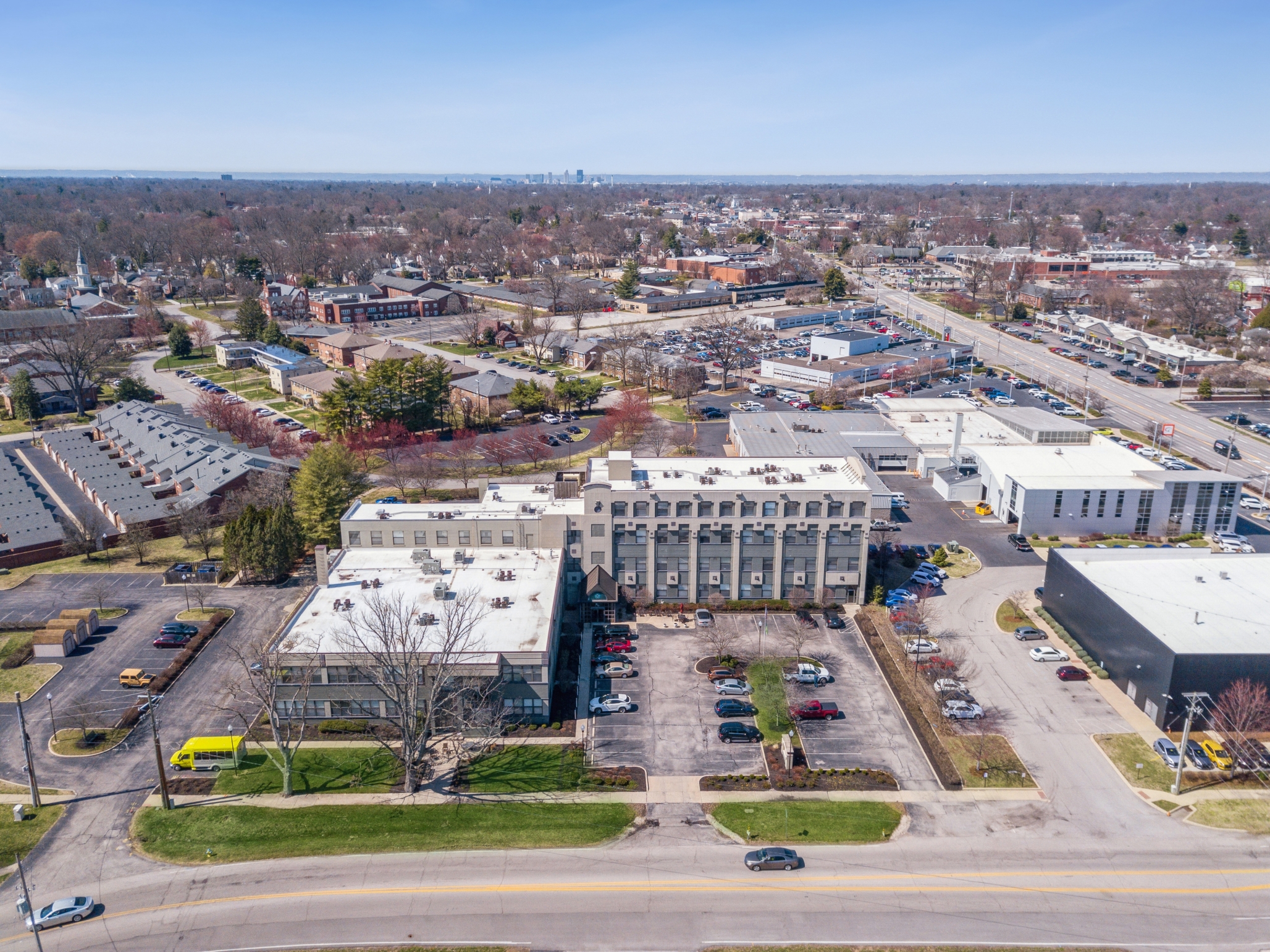
Shelbyville is the Shelby County seat, and that county-seat identity shapes the market as much as its position along I-64 does. Industrial sites, retail, and rental housing here serve both the growth corridor traffic moving between Louisville and Lexington and a resident population with its own independent demand -- an investor evaluating Shelbyville purely as an I-64 satellite of Louisville is going to miss half of what actually drives the local economy.
What's Trading In Shelby County
The property types available here reflect that dual identity.
- industrial
- retail
- multifamily
- self-storage
- net lease
Industrial buildings tend to serve the growth-corridor traffic along I-64, while retail and multifamily lean more on county-seat demand -- an investor should be clear which driver applies to a given building before comparing it to a purely corridor-driven property elsewhere in the metro. Multifamily near the courthouse square, for example, draws on a genuinely different renter base than a newer apartment complex built to serve I-64 commuters, and the two should not be underwritten with the same rent-growth assumptions.
I-64, US 60, KY 55, and Commuter Dynamics
I-64, US 60, KY 55, and Freedom's Way carry most of Shelbyville's commercial traffic. Commuter patterns and county-seat government activity both affect rents in ways that a purely corridor-focused analysis would miss, so pricing here should be checked against both Louisville-area comps and local Shelby County comps rather than either alone. A property that looks underpriced against Louisville numbers might be priced correctly for what the local market will actually bear.
Courthouse-adjacent office space in particular can carry steadier occupancy than a comparable building along the I-64 frontage, simply because government and legal tenants tend to stay put longer than retailers chasing the next growth corridor lease deal.
Why The 180-Day Period Runs Differently In A County Seat
Shelbyville's distance from Louisville and its smaller pool of commercial brokers, title agents, and lenders can slow down parts of a transaction that move faster in a dense metro submarket. The 180-day exchange period does not extend for these practical delays, so an investor identifying a Shelbyville replacement should build extra lead time into financing and title work rather than assuming the same closing pace as a Jefferson County deal. A qualified intermediary experienced with rural and exurban Kentucky closings can flag these timing gaps early, before they threaten the deadline.
A local appraiser's availability can also be a factor investors overlook: fewer appraisers regularly work Shelby County commercial assignments than work Jefferson County ones, and scheduling that appraisal early in the diligence period avoids a bottleneck later when the lender needs it to finalize loan terms.
Backup Markets Along The Growth Corridor
Middletown, La Grange, Jeffersontown, and Elizabethtown are the standard comparison set for a Shelbyville exchange. Middletown and Jeffersontown sit closer to Louisville proper and typically close faster, while La Grange shares more of Shelbyville's county-seat character and Elizabethtown extends the comparison further south. None of these should be assumed to close on the same calendar as a Shelbyville deal without independent confirmation from local title and lending contacts.
An investor who needs the fastest possible backup close should generally look first to Middletown or Jeffersontown given their proximity to a deeper pool of Jefferson County title and lending resources, reserving La Grange or Elizabethtown for cases where the county-seat tenant profile is a better underwriting match for the relinquished property.
What The Closing Team Needs To Know Early
A Shelbyville replacement file should note the specific driver -- corridor traffic or county-seat demand -- behind the property choice, the local pricing comparison used, and any timing risk identified in title or lender availability. Sharing this with your CPA, qualified intermediary, and lender as soon as the property is identified, rather than after diligence is already underway, gives the closing team room to manage a slower local process without threatening the 180-day deadline.
Investors who have closed deals in Jefferson County before sometimes assume a Shelby County closing will move at the same pace simply because the driving distance is short. It is not a safe assumption, and confirming it directly with local title and lending contacts early is worth the extra phone call.
Common 1031 Exchange Questions
Is Shelbyville best understood as an I-64 corridor market or a Shelby County market?
Both. Industrial demand tends to follow the I-64 corridor, while retail and multifamily also draw on the county-seat population and government activity. Treating it as only one or the other will misprice a property.
Why might a Shelbyville transaction take longer to close than a Louisville-area deal?
A smaller pool of local brokers, title agents, and lenders can slow parts of the process. The 180-day exchange period does not adjust for this, so building extra lead time into the closing schedule is worth doing from the start.
How should you price a Shelbyville property relative to Louisville-area comps?
Check the price against both Louisville-area numbers and local Shelby County sales data. A property that looks underpriced compared to Jefferson County figures may actually be priced correctly for the local market.
Should your qualified intermediary have experience with exurban Kentucky closings?
It helps. A QI familiar with rural and exurban timing can flag title or lender delays early, which matters more in Shelbyville than in a dense metro submarket where those services are more readily available.
Is Elizabethtown a reasonable backup if a Shelbyville deal falls through?
It can be, and it shares some exurban timing characteristics, but it should still be evaluated independently for pricing, tenant profile, and closing timeline rather than assumed equivalent.