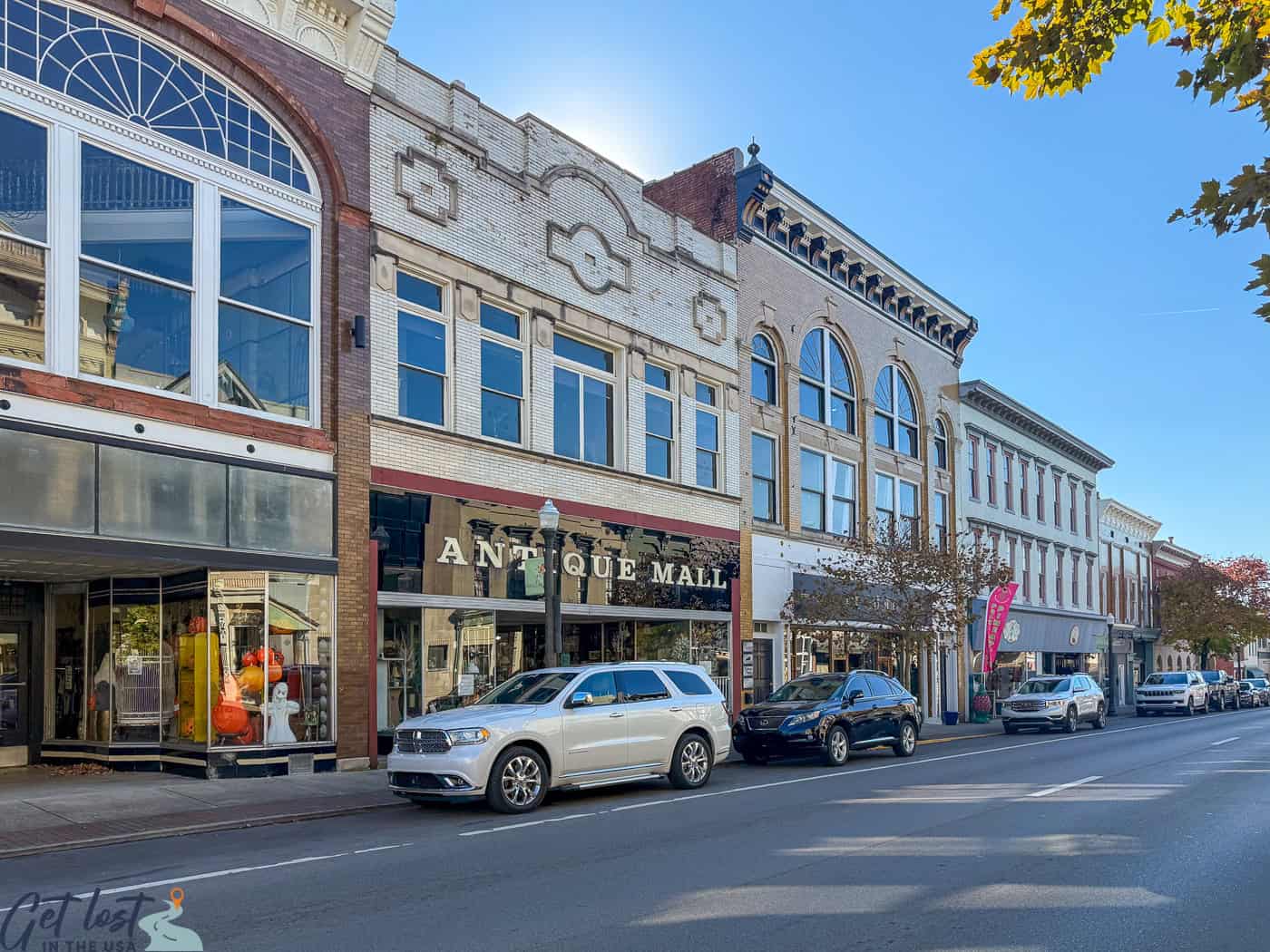
New Albany sits in Floyd County, Indiana, across the Ohio River from Louisville, and that river is a bigger factor in underwriting than most out-of-state buyers expect. Historic downtown buildings, State Street corridor retail, and small multifamily assets trade at a real discount to comparable Kentucky-side product, but the discount reflects genuine differences in tenant base, financing terms, and building condition -- not simply distance from Louisville. An investor who prices New Albany off Jefferson County comps is going to be wrong in one direction or the other.
What A Replacement Property Actually Looks Like Here
The available stock skews toward a specific mix, and each type carries its own diligence load.
- multifamily
- mixed-use buildings
- retail
- small office space
- self-storage
Historic buildings in particular need a harder look at capital condition -- brick, roofing, and mechanical systems in a downtown storefront built decades ago do not get a pass just because the tenant mix looks stable today. Mixed-use buildings with ground-floor retail and upper-floor apartments or office space also need a separate accounting of which income stream is actually paying the bills, since a downtown storefront with a vacant second floor is a different investment than one with both levels leased.
Downtown, State Street, I-64, and the Indiana-Side Discount
Downtown New Albany, State Street, I-64, and Grant Line Road cover most of the commercial activity worth tracking. Indiana-side values commonly run below Louisville-side comps for similar building quality, and an investor who does not confirm that gap with real local sales data risks either overpaying relative to the market or underestimating what a seller will actually accept. Historic buildings deserve extra diligence on capital condition specifically because their age and construction style are not directly comparable to newer Kentucky-side stock.
Cross-River Timing Adds Risk To The Exchange Clock
Nothing about the 45-day identification window or the 180-day exchange period changes because a replacement sits in Indiana instead of Kentucky, but the practical steps do. Title work, lender coordination, and inspections can move on a different schedule across a state line, and an investor who assumes an Indiana closing will move at the same pace as a familiar Kentucky deal is the one most likely to watch the clock run out mid-transaction. Like-kind treatment covers real property held for investment regardless of which state it sits in, but the paperwork and local requirements are not identical.
Comparable Markets On Both Sides Of The River
Clarksville, Indiana; Jeffersonville, Indiana; Shively, Kentucky; and Louisville, Kentucky are the natural comparison set when a New Albany candidate slows down. Clarksville and Jeffersonville share the Indiana-side discount and cross-river dynamics, while Shively and Louisville give a Kentucky-side benchmark for the same property types. None of these should be treated as interchangeable with New Albany -- each has its own seller behavior, its own lender relationships, and its own closing timeline, and assuming otherwise is how a backup plan collapses at the worst possible moment.
Coordinating The Qualified Intermediary Across State Lines
A qualified intermediary handles the exchange funds regardless of which state the replacement property sits in, but the investor still needs to confirm early that the QI, the title company, and the lender are set up to close an Indiana transaction on the same calendar as the relinquished Kentucky property. Constructive receipt rules do not bend for a cross-river closing delay, so this coordination should happen well before day 180, not as a last-minute scramble when a New Albany seller's timeline turns out to run slower than expected.
Indiana title requirements, recording procedures, and lender documentation are not identical to Kentucky's, and an investor who assumes the two states handle a commercial closing the same way is the one most likely to discover a gap during the final week of the exchange period. Confirming these differences with a title company experienced on both sides of the river, before the identification deadline rather than after, is what keeps a New Albany replacement from becoming the reason an otherwise sound exchange fails.
Common 1031 Exchange Questions
Does a 1031 exchange work the same way when the replacement property is in Indiana instead of Kentucky?
The like-kind rule, 45-day identification window, and 180-day exchange period are federal and do not change by state. What changes is title, lender, and closing coordination, which can move on a different local timeline across the Ohio River.
Why does New Albany property trade below comparable Louisville-side assets?
Differences in tenant base, building age, and local financing terms explain most of the gap, not simply proximity to Louisville. An investor should confirm the discount against real local sales rather than assuming a flat cross-river markdown.
Are historic downtown buildings in New Albany a good 1031 replacement?
They can be, but their age means capital condition -- roofing, mechanical systems, structural work -- needs closer review than a newer suburban building would require. A stable tenant roster does not tell you the condition of the building underneath it.
Should you identify a Kentucky backup if your primary replacement is in New Albany?
Yes. Keeping a Kentucky-side alternative such as Shively or Louisville on the identification list gives you a comparable property that will not be affected if the Indiana closing runs into cross-river delays.
Who confirms whether a New Albany property qualifies as like-kind?
Your qualified intermediary and tax advisor should confirm qualification together. The QI manages the exchange funds and deadlines; your CPA or tax advisor should confirm how the specific property affects your basis and boot exposure.