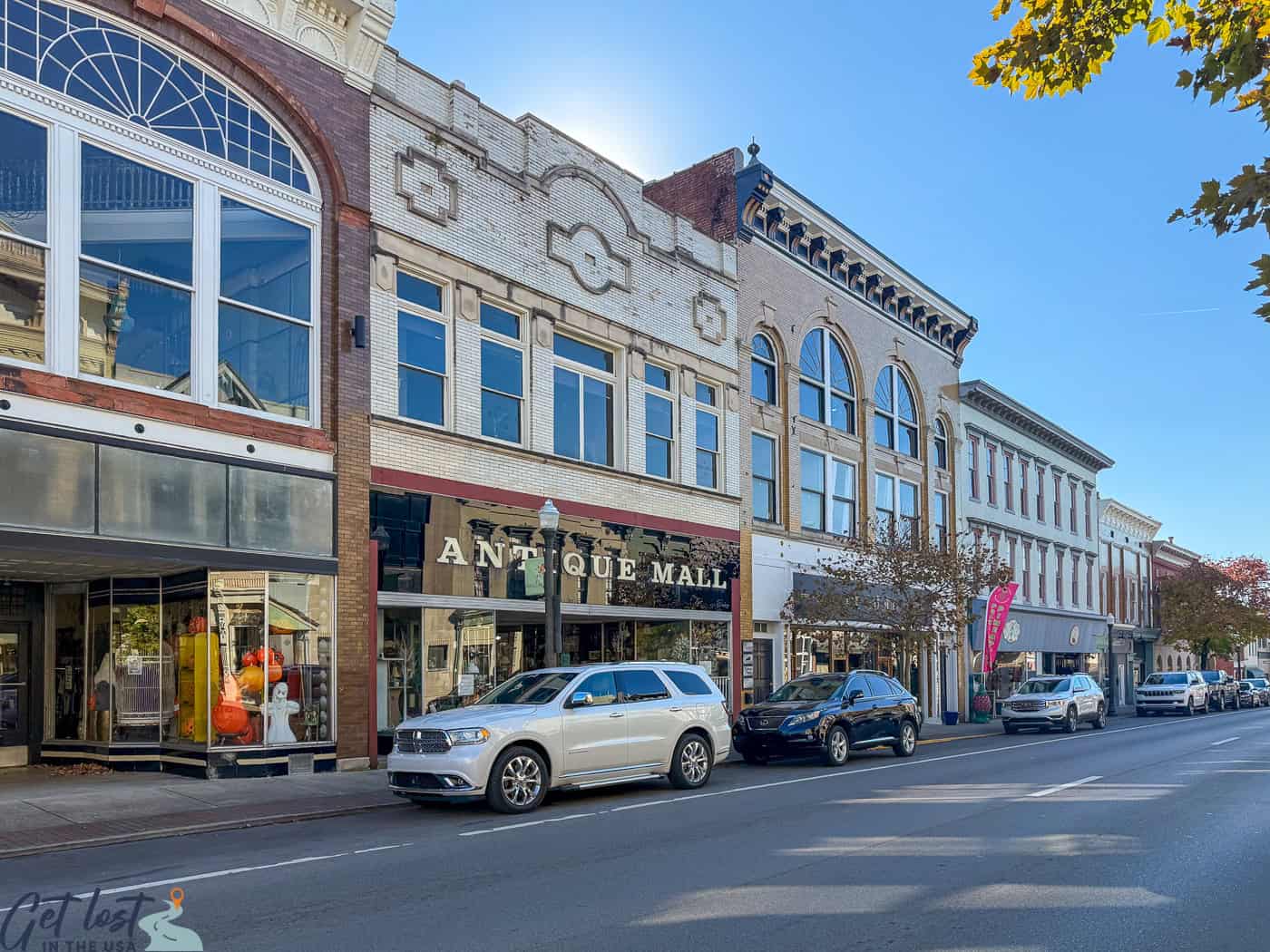
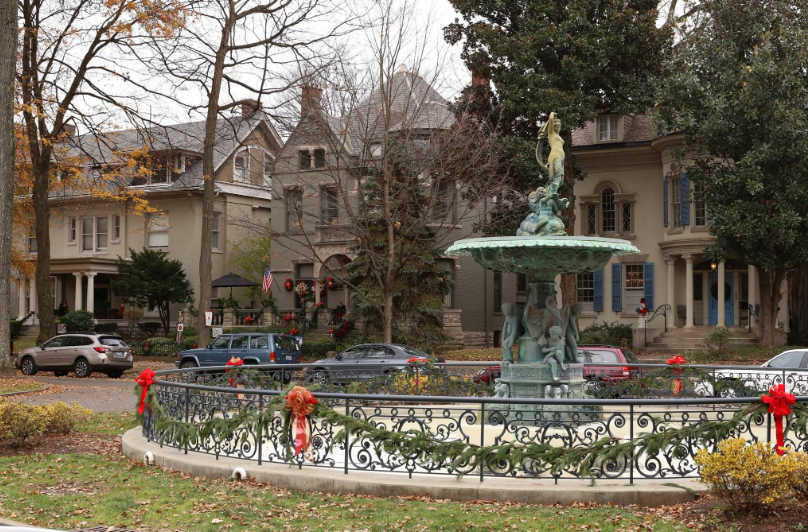
La Grange is the Oldham County seat, a courthouse town where a working rail line still runs down the middle of Main Street and daily commuter traffic to Louisville flows along I-71. It is a real, functioning small-town commercial market, but sellers need to be honest about its scale before building a replacement plan around it.
A Small County Seat With Growth on Its Edge
Main Street holds the historic core, with small storefronts, professional offices, and a handful of restaurants that depend on courthouse and local government foot traffic. Growth in the past decade has clustered along I-71 and Commerce Parkway instead, where newer retail and self-storage have gone up to serve the county's expanding commuter population, while KY 53 connects the two halves of town.
The result is a two-speed market: a slow, historic downtown core and a faster-moving interstate edge, and a replacement property drawn from one will not behave like one drawn from the other.
What Actually Trades in Oldham County's Seat
- Small storefronts and professional offices on Main Street
- Newer retail near the I-71 interchange
- Self-storage along Commerce Parkway
- Small multifamily near the historic downtown
- Medical office serving the growing commuter population
What a Thin Inventory Costs a Seller Under Deadline Pressure
The expensive mistake in a market this small is assuming a comparable replacement will surface inside the 45-day window just because one exists somewhere in the county. La Grange's total inventory of exchange-eligible commercial property turns over slowly, and a seller who waits to start the search until after closing on the relinquished property can find the list far shorter than expected.
Starting the search early and keeping a backup candidate outside La Grange itself is the only real hedge against a market this thin running dry at the wrong moment.
How La Grange Compares to Its Neighbors
Anchorage and Prospect share a similarly affluent, low-inventory character but lean almost entirely residential, Shelbyville carries a comparable county-seat retail pattern with its own courthouse-driven core, and Middletown offers more depth for buyers willing to drive further toward Louisville. Sellers should treat La Grange as one candidate in a wider search area, not the whole plan.
What to Tell the Qualified Intermediary About a Small-Town Deal
Because inventory here is thin, the qualified intermediary should know from the outset that the identification list may need to extend beyond La Grange's borders to hold up under the 45-day deadline. Sellers should confirm with their tax advisor how a lower-value replacement interacts with boot if the eventual purchase price comes in below the relinquished property's value, since that gap is more likely in a small market like this one.
What the Rail Line Actually Means for a Main Street Property
The active rail line running through downtown is part of what gives La Grange its character, but it is also a practical fact any Main Street buyer needs to underwrite honestly. Freight schedules affect noise and access at certain times of day, and a buyer who has not walked the property during a train pass has not fully evaluated the tenant experience a retail or office lease depends on.
It rarely rules out a purchase, but it should never be a surprise discovered after the identification is already filed.
Weighing the County's Growth Against the Town's Pace
Oldham County as a whole has grown steadily as Louisville commuters look for more space and lower costs, but that growth has concentrated along the I-71 corridor more than inside La Grange's historic core. A buyer expecting Main Street rents to climb at the same pace as the newer retail near the interstate is measuring the wrong part of the market against the right trend line, and the mismatch shows up as disappointing rent growth on a downtown building bought with commuter-driven assumptions.
Common 1031 Exchange Questions
Is there enough commercial inventory in La Grange to complete an exchange on its own?
It is limited. La Grange works well as one candidate in a broader Oldham County search, but relying on it exclusively risks running out of options before the 45-day deadline.
Why does a Main Street property behave differently than one near I-71?
Main Street depends on local foot traffic tied to the courthouse and downtown business district, while I-71-adjacent retail draws on commuter and pass-through traffic. Rent growth and tenant demand follow different patterns in each.
What is the biggest risk of waiting to search for a La Grange replacement?
The available inventory turns over slowly, so waiting until late in the 45-day window can leave a seller with far fewer real candidates than expected.
How does La Grange compare to Shelbyville as a small county-seat option?
Both share a historic downtown core with newer growth on the edge, though the two draw from different commuter populations. Comparables should come from each town's own data, not be treated as interchangeable.
Should you keep a backup outside Oldham County?
Given how thin the inventory can run here, most sellers benefit from identifying at least one backup candidate in a deeper market like Middletown, which your qualified intermediary can help structure into the identification list.
Does the rail line through downtown affect property values on Main Street?
It affects noise and access at certain times of day more than it affects underlying value. Buyers should walk the property during a train pass before finalizing an offer, rather than treating it as a minor detail.
How quickly should you start looking once you know you are selling a La Grange property?
As early as possible. Given how thin local inventory can run, beginning the search before the relinquished property even closes gives a meaningfully better chance of a real identification list.